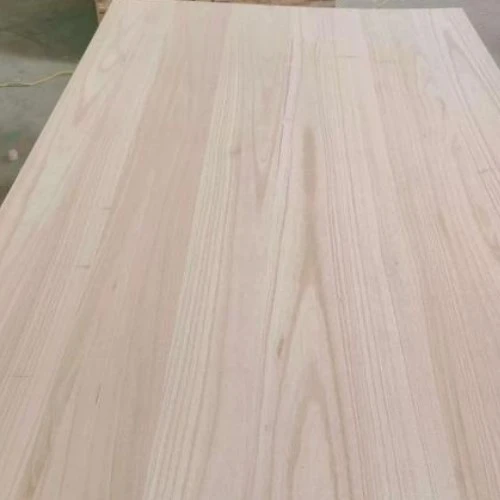
1. Surface Quality: The surface should be smooth, free of burrs, saw marks, stains, or discoloration (such as localized blackening or yellowing). Ideally, choose boards free from cracks, knots, resin pockets, or glue lines. Natural warping across the entire board should be minimal to prevent "sand-through" issues-where the base material is exposed due to improper sanding.
2. Structural Integrity: The board's layered structure should be stable, with no signs of separation or delamination between the veneer and the substrate, or between the internal layers of the substrate. Low-Formaldehyde Materials: Avoid decorative papers with a pungent odor; a strong smell often indicates higher formaldehyde emissions and greater potential pollution hazards.
3. Sound Test: Tap the board's surface with a sharp, pointed object and listen for variations in sound. A change in sound suggests internal voids. Voids in the core material reduce the board's load-bearing capacity; uneven stress over time can lead to severe structural warping or deformation, as well as compromising the board's appearance and usability.
4. Weight: Weight varies by product, reflecting differences in density and quality. However, a heavier board is not necessarily a better one; actual inspection is required to assess quality accurately.
5. Appearance and Color: Color is a primary indicator of quality. Since the material is wood, the grain and appearance should look natural; however, different product categories will yield different wood grain effects.