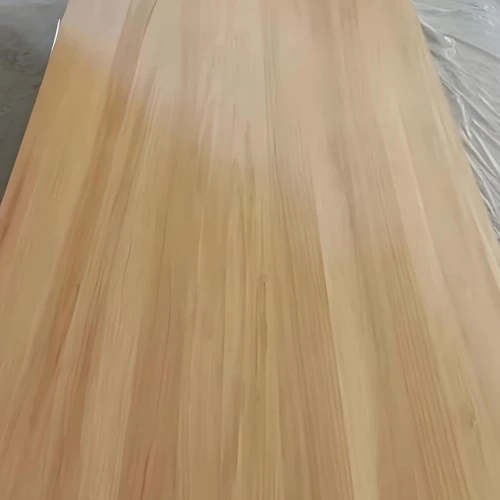
Different types of wood boards serve different purposes; for instance, poplar eco-boards are commonly used for decorative paneling, whereas pine eco-boards are more frequently used for furniture making.
Poplar contains very low levels of formaldehyde. It is the most widely produced timber species in my country; found across the country, it is easily sourced and typically comes from natural, untreated stock. It is easy to process and has few knots, making it well-suited for decorative applications.
Pine is an environmentally friendly material. Pine furniture requires minimal processing and offers a long service life, making it an ideal choice for furniture manufacturing.
As a coniferous species, pine is characterized by a distinct resinous scent, a pale yellow hue, and numerous knots. It reacts quickly to atmospheric temperature changes, is prone to swelling, and is extremely difficult to air-dry naturally. Consequently, it requires artificial processing-such as kiln drying, degreasing (to remove organic compounds), bleaching (to unify the color), and stabilizing treatments-to prevent warping.